How Does Custom Lighting Work From a Reference Image?
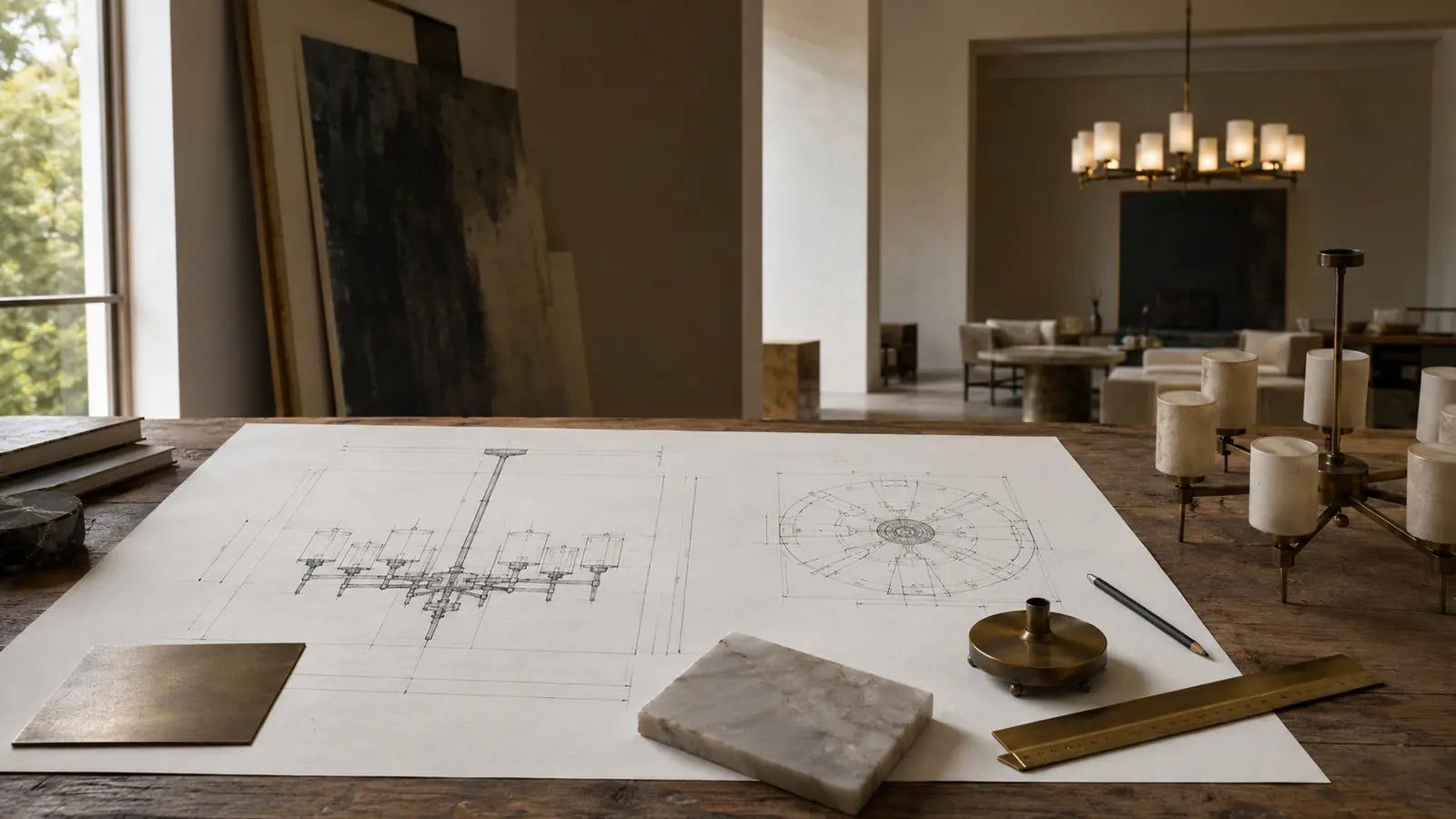
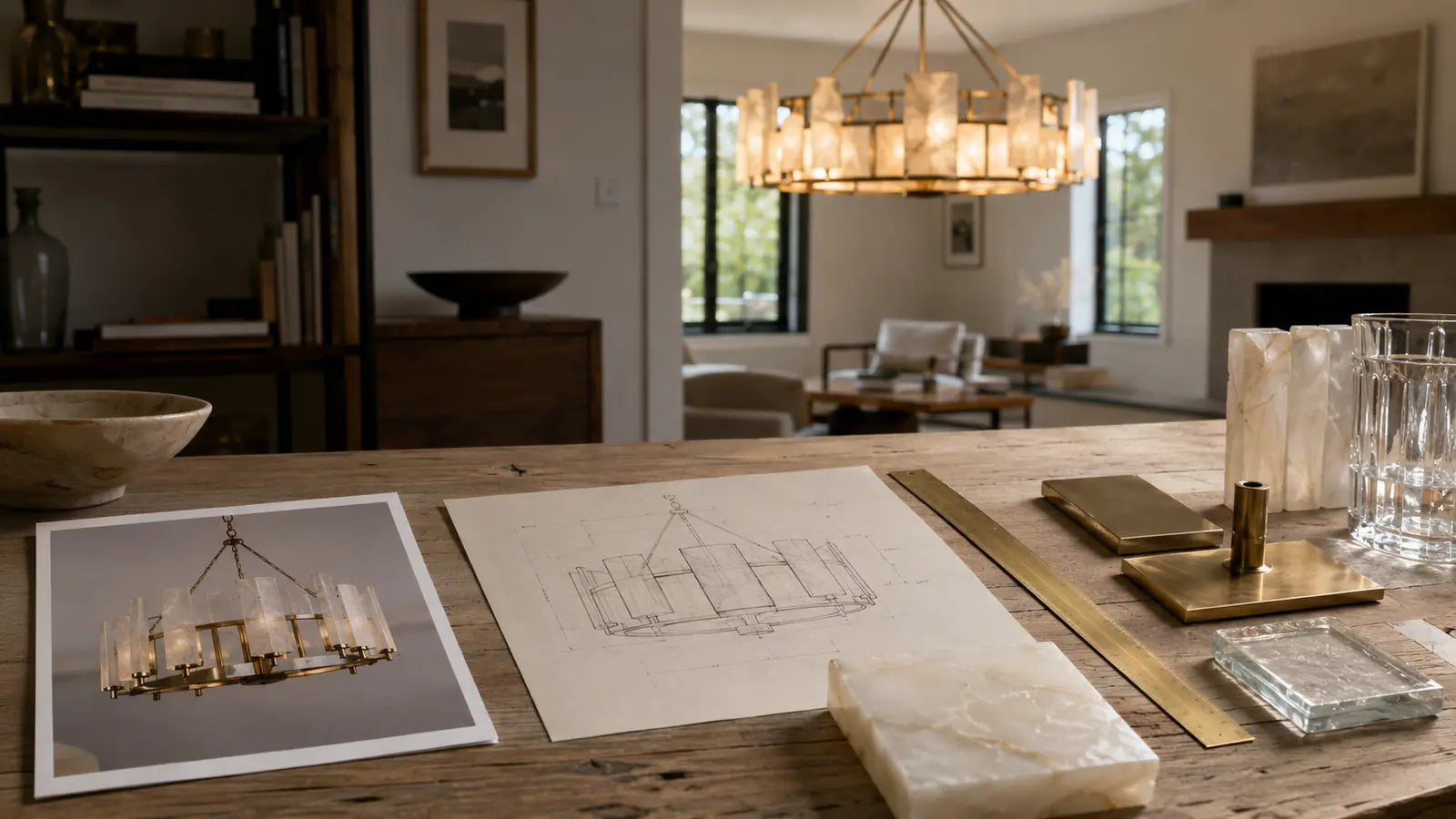
A saved photograph is often enough to begin a custom-lighting conversation. You do not need a finished CAD file, a full specification package, or the vocabulary of a lighting designer before you contact us. A clear reference image, together with a few facts about the room, gives us a practical starting point.
What happens next is not a one-click copy-and-paste process. We use the reference to understand the parts you respond to—perhaps the overall silhouette, the rhythm of the arms, the way light passes through stone, or simply the scale of the fixture in the room. From there, we work out what can be built for your space and which details still need a decision.
What a reference image tells us
A photograph can communicate more than people expect. It may show:
- the general shape and proportion of the fixture;
- the material direction, such as alabaster, glass, crystal, brass, or painted metal;
- the type of light—soft and diffused, decorative and sparkling, or more directional;
- the visual weight of the canopy, frame, rods, chains, or suspension cables;
- how the fixture relates to a dining table, stairwell, foyer, island, or seating area.
It does not tell us the hidden dimensions, weight, electrical components, mounting condition, or exact material thickness. Those are the details that turn an inspiration image into a workable lighting proposal.
The few details worth sending at the start
If you have them, send the following with your image:
- Room dimensions and ceiling height. Approximate measurements are fine for an initial review.
- The target fixture size. If you are unsure, tell us what sits below the light and we can discuss proportion.
- Installation location. A dining room, double-height foyer, sloped ceiling, and hotel lobby create very different requirements.
- Finish and material preferences. A simple note such as “warmer brass” or “less yellow stone” is useful.
- Quantity and destination. These affect production planning, packing, and shipping.
- Any electrical requirements you already know. For a U.S. project, that may include 110–120V, dimming, color temperature, or a project-specific listing requirement.
Do not delay an inquiry because one of these items is missing. “I have this photograph and a 10-foot ceiling” is still a reasonable first message.
From inspiration to a buildable proposal
Our first job is a feasibility review. We look at the apparent structure, materials, scale, and likely installation method. If the proposed size changes substantially from the reference, the frame and suspension may need to change with it. A chandelier that looks balanced at 36 inches wide may feel too dense—or structurally behave differently—when enlarged to 84 inches.
Next, we clarify the specification. Depending on the project, that may include an annotated drawing or CAD drawing showing the overall dimensions, canopy, suspension length, main materials, finish direction, light source, and electrical requirements. Simple modifications do not always need the same drawing depth as a large, fully bespoke installation.
The important point is that the final decisions are confirmed in writing before production begins. A beautiful image is the beginning of the brief, not the production instruction.
What can usually be changed
Many projects involve a combination of the following:
- overall diameter, length, width, or height;
- drop length for a specific ceiling;
- frame finish and metal tone;
- glass, crystal, stone, or decorative components;
- number and arrangement of light sources;
- color temperature and dimming direction;
- canopy shape and suspension method;
- packing or assembly planning for difficult access.
Not every detail can be changed independently. Material weight, heat, balance, wiring space, and the way parts connect all place real limits on a design. We would rather explain a constraint early than approve a change that creates trouble during installation.
A note about copying another design
Reference images should help explain the design direction, not erase the work of the original designer. If an image shows another maker’s proprietary design, brand mark, or distinctive protected work, we may suggest adapting the idea rather than reproducing it exactly. Changing the proportion, material language, component arrangement, or detailing can also produce a fixture that belongs more naturally in your room.
What you receive before production
The exact package depends on the project, but a custom proposal may confirm:
- agreed dimensions and quantity;
- materials and finish direction;
- voltage, light source, color temperature, and control requirements;
- canopy and suspension details;
- price and payment stages;
- project-specific production timing;
- shipping and installation-information arrangements.
Production time is not identical for every light. A familiar frame with a finish change is different from a large fixture requiring new tooling, stone selection, or several rounds of drawing review. We confirm timing after the design and material requirements are understood, then arrange production promptly after approval.
Before you send the image
Choose the clearest version you have. If the light is shown in a room, a second close-up is useful. Add a photograph of the actual space if possible, even if construction is unfinished. A ceiling plan, rough sketch, or real-estate floor plan can also prevent misunderstandings.
There is no need to prepare a polished presentation. A short, honest brief is easier to work with than a long document full of guessed specifications.
A practical first message: “I like the shape and warm alabaster light in this image. The fixture will hang above a 96-inch dining table under a 10-foot ceiling. I am open to your advice on diameter and drop.”
If you have a reference image in mind, start a custom-lighting inquiry. You can also review our real project records to see how material, scale, and specification decisions are documented.