Alabaster vs. Glass Chandeliers: Which Material Is Better?
If you are choosing between an alabaster chandelier and a glass chandelier, the simplest answer is this: choose alabaster when you want a warmer, softer, more atmospheric light; choose glass when you want more sparkle, clarity, brightness, or a lighter visual presence. Both materials can be beautiful, but they do different jobs in a room.
The better choice depends on where the chandelier will be installed, how much light the room needs, how visible the material will be during the day, and whether you prefer natural variation or a more controlled finish. For custom lighting, the material decision also affects weight, structure, packing, maintenance, and sometimes the production drawing.
Quick answer: alabaster or glass?
Use this as a first direction before going into the details:
- Choose alabaster for warm glow, natural stone character, soft diffusion, and a calmer luxury look.
- Choose clear or fluted glass when you want visible bulbs, sparkle, crisp reflections, or a lighter fixture visually.
- Choose frosted glass when you like the cleaner look of glass but still want more diffusion.
- Review weight and support early if the fixture uses large stone shades or many alabaster panels.
- Ask for material photos or samples when tone, veining, transparency, or glass texture matters to the project.
There is no universal winner. The best chandelier material is the one that supports the room, the lighting purpose, and the practical installation conditions.
Alabaster vs. glass chandelier comparison
| Decision point | Alabaster chandelier | Glass chandelier |
|---|---|---|
| Light effect | Soft, warm, diffused glow with natural variation. | Can be clear, sparkling, textured, frosted, or highly transparent. |
| Visual character | Quiet, sculptural, organic, and often more substantial. | Clean, crisp, bright, decorative, or lighter depending on glass type. |
| Material variation | Each stone piece has unique veining, tone, and translucency. | More controllable, though handmade glass may still vary. |
| Weight | Usually heavier, especially in large panels or thick shades. | Often lighter, but thick or oversized glass can still require careful support. |
| Best rooms | Dining rooms, foyers, stairwells, bedrooms, hotels, and warm residential interiors. | Kitchens, dining rooms, bathrooms, modern foyers, hospitality spaces, and brighter interiors. |
| Maintenance | Needs gentle handling and suitable cleaning methods for natural stone. | May show fingerprints, dust, or water marks more visibly depending on finish. |
What makes alabaster different?
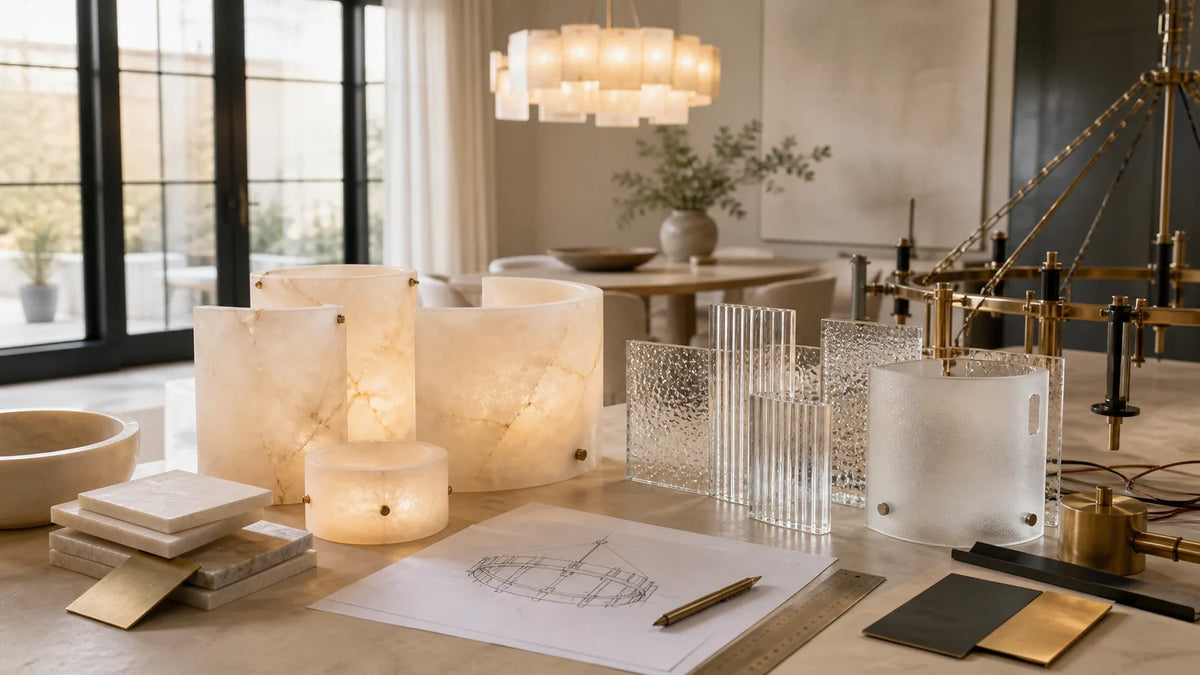
Alabaster is a natural stone. In lighting, it is valued because it can diffuse light while keeping a visible mineral character. When illuminated, good alabaster can look warm and layered rather than flat. During the day, the same piece may show veins, clouds, mineral lines, and tone changes.
That natural variation is part of the appeal, but it also means alabaster is not a perfectly repeatable industrial material. Two shades cut from different parts of the stone may not match exactly. Some pieces are warmer, some are paler, and some have stronger veining. For many customers, that is the reason to choose alabaster. For projects that require perfectly uniform appearance, it should be discussed early.
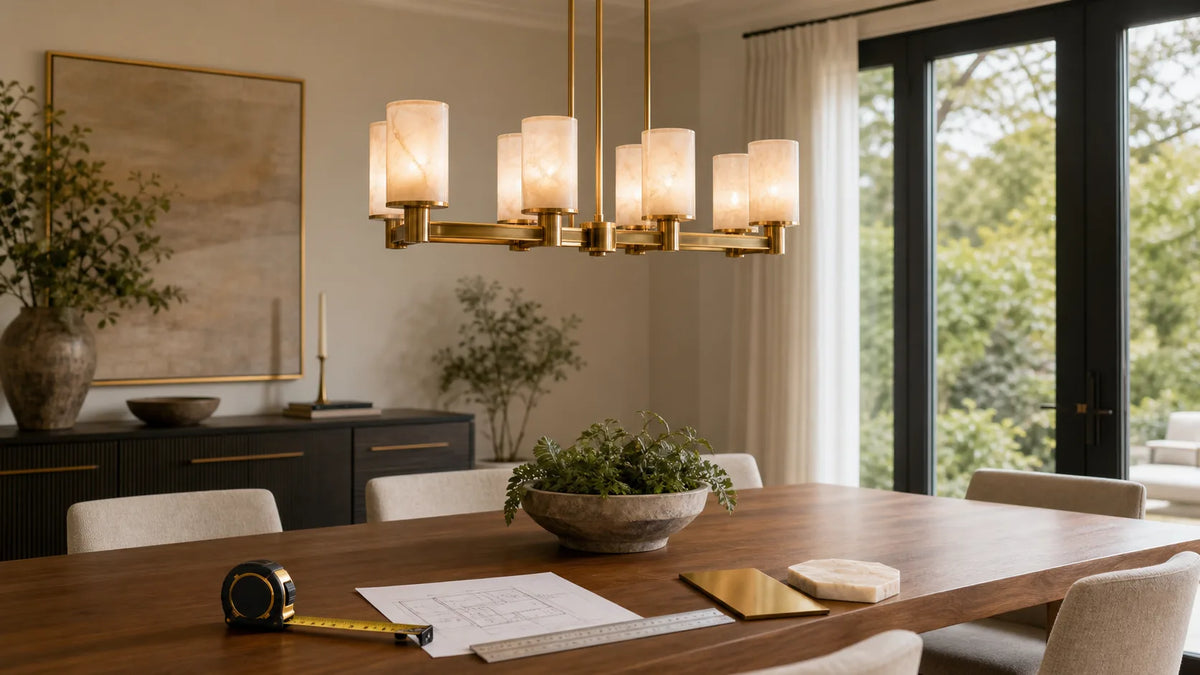
Alabaster also changes the way a chandelier feels in the room. A brass and alabaster chandelier can look substantial even when the frame is simple. It is often chosen for spaces where the light should feel calm, soft, and architectural: over a dining table, in a stairwell, above a bed, or in a foyer where the fixture is visible from several angles.
What makes glass different?
Glass gives a designer more control over transparency, texture, brightness, and reflection. Clear glass can show the bulb and create sparkle. Fluted glass can stretch highlights into vertical lines. Frosted glass can soften the light without the stone character of alabaster. Seeded, ribbed, smoked, or opal glass can each change the mood of the fixture.
Glass is often a good choice when the room needs more visible brightness or a cleaner modern detail. It can feel lighter than stone, especially in kitchens, breakfast areas, and rooms where the chandelier should not feel too heavy. Glass can also work well when the design depends on repeated small shades, slender arms, or a more transparent silhouette.
That does not mean glass is always simple. Large glass components need careful packing. Hand-blown or textured glass may vary slightly from piece to piece. Clear glass may show dust, fingerprints, bulb shape, and glare more easily than diffused materials. These details matter when the chandelier is close to eye level or placed above a dining table.
Which material gives better light?
The question is not only "which is brighter?" It is "what kind of light does the room need?" Alabaster usually gives a softer and warmer effect because the stone diffuses the light source. It is useful when glare control and atmosphere are more important than maximum brightness.
Glass can give more direct brightness, especially if it is clear or lightly textured. That may be useful over a kitchen island, in a brighter dining room, or in a space where the chandelier is one of several light sources. Frosted or opal glass sits between the two: cleaner than stone, but softer than clear glass.
For a custom chandelier, brightness also depends on the number of light sources, bulb type, wattage limits, LED color temperature, shade depth, and dimming plan. The material is important, but it is only one part of the lighting result.
Which material is better for a dining room?
Both can work. For dining rooms, alabaster is often chosen when the goal is a warm evening atmosphere and a refined material presence. It pairs well with brass, bronze, blackened metal, natural wood, and quieter interiors. It can make the fixture feel special without relying on sparkle.
Glass is often chosen when the dining room needs a fresher, brighter, or more transparent look. A fluted glass chandelier can feel tailored and elegant. Clear glass can look lighter, but the bulb choice becomes more visible. Frosted glass can reduce glare while keeping a cleaner outline.
If the dining table is narrow, visual weight matters. A heavy alabaster chandelier may be beautiful but too dominant if the frame is large and low. A glass chandelier may preserve sightlines better. If the dining room is large or has a high ceiling, alabaster may help the fixture hold the space with more presence.
Which material is better for a foyer or stairwell?
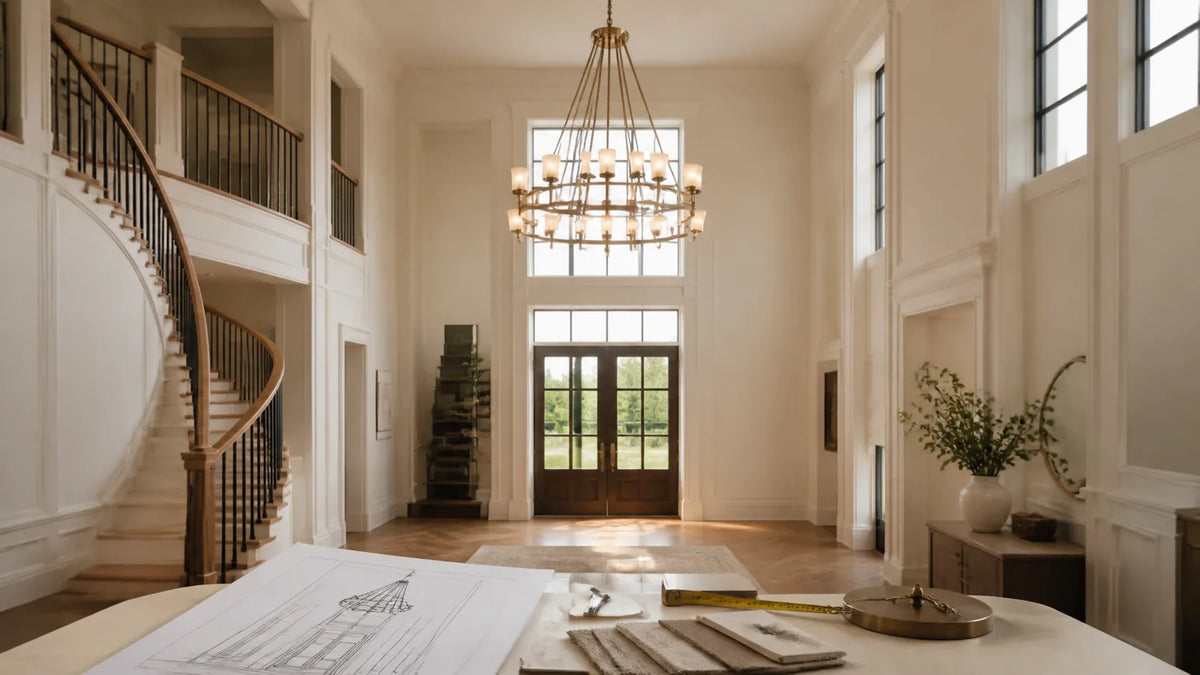
Foyers and stairwells often need a chandelier that looks good from below, from the side, and sometimes from an upper landing. Alabaster can be excellent when the fixture is viewed close enough to appreciate the stone. It gives a soft glow and a strong material identity.
Glass can be better when the space needs vertical sparkle, more openness, or a lighter structure. For tall stairwells, repeated glass drops or shades can create movement without making the fixture feel too heavy. The right answer depends on the scale of the opening, the ceiling support, the surrounding finishes, and how much maintenance access will be available later.
Weight and installation should be checked early
Material choice is not only visual. Alabaster can add meaningful weight to a chandelier, especially when the design uses thick shades, large panels, stone rings, or many repeated pieces. That may affect the frame, canopy, suspension points, packing method, and installation plan.
Glass also requires care, but the concerns may be different. Large curved glass, long tubes, or delicate handmade pieces need protective packing and a clear installation sequence. For both materials, the project team should confirm ceiling support, electrical conditions, access, and local installation requirements before approving production.
This is why we prefer to review custom chandeliers as a full system: material, size, drop, light source, canopy, support, and installation are connected. A beautiful sample is only the beginning.
How to decide for a custom chandelier
If you are comparing alabaster and glass for a custom lighting project, send the room photos, ceiling height, fixture size target, and reference images. It also helps to explain what you like about each material. For example: "I like the warm glow of alabaster, but I want the fixture to feel visually light," or "I like fluted glass, but I do not want exposed glare at the dining table."
Those comments are useful because they reveal the real design priority. Sometimes the answer is alabaster with a slimmer frame. Sometimes it is frosted glass instead of clear glass. Sometimes the best option is a mixed-material chandelier that uses stone in key positions and glass where more brightness or lightness is needed.
If you are planning a project-specific fixture, our custom lighting process can review material direction together with size, finish, drawings, electrical details, and installation guidance.
FAQ
Is alabaster better than glass for chandeliers?
Alabaster is better when you want soft diffusion, warm glow, and natural stone character. Glass is better when you want more transparency, sparkle, visible brightness, or a lighter look. The better material depends on the room and the fixture design.
Are alabaster chandeliers heavy?
They can be. The weight depends on the size, thickness, number of stone pieces, and frame construction. Large alabaster chandeliers should be reviewed for ceiling support, suspension, canopy design, packing, and installation planning.
Does glass or alabaster give more light?
Clear glass often allows more direct brightness, while alabaster usually diffuses light into a softer glow. Frosted or opal glass can sit between the two. The final brightness also depends on the light source, shade design, wattage limits, and dimming plan.
Can alabaster and glass be used together?
Yes. Some custom chandeliers combine alabaster with glass, metal, crystal, or other materials. Mixed materials should be reviewed carefully so the fixture still feels balanced and the weight, wiring, and assembly remain practical.
Which chandelier material is easier to maintain?
Glass may be easier to wipe, but clear glass can show fingerprints, dust, and water marks more visibly. Alabaster needs gentler handling because it is natural stone. For either material, maintenance depends on where the chandelier is installed and how easy it is to access.
The best choice is not the material with the most dramatic sample photo. It is the material that supports the room, the light effect, the installation conditions, and the way the fixture will be used every day. When those pieces are reviewed together, alabaster and glass can both become strong choices for a custom chandelier.