How to Choose a Chandelier for a High-Ceiling Foyer
A high-ceiling foyer needs a chandelier that is large enough to hold the vertical space, but not so large that it blocks the architecture, upper windows, stair views, or safe circulation below. The best starting point is to review four things together: ceiling height, foyer width and depth, the viewing angles from each level, and the lowest point of the fixture.
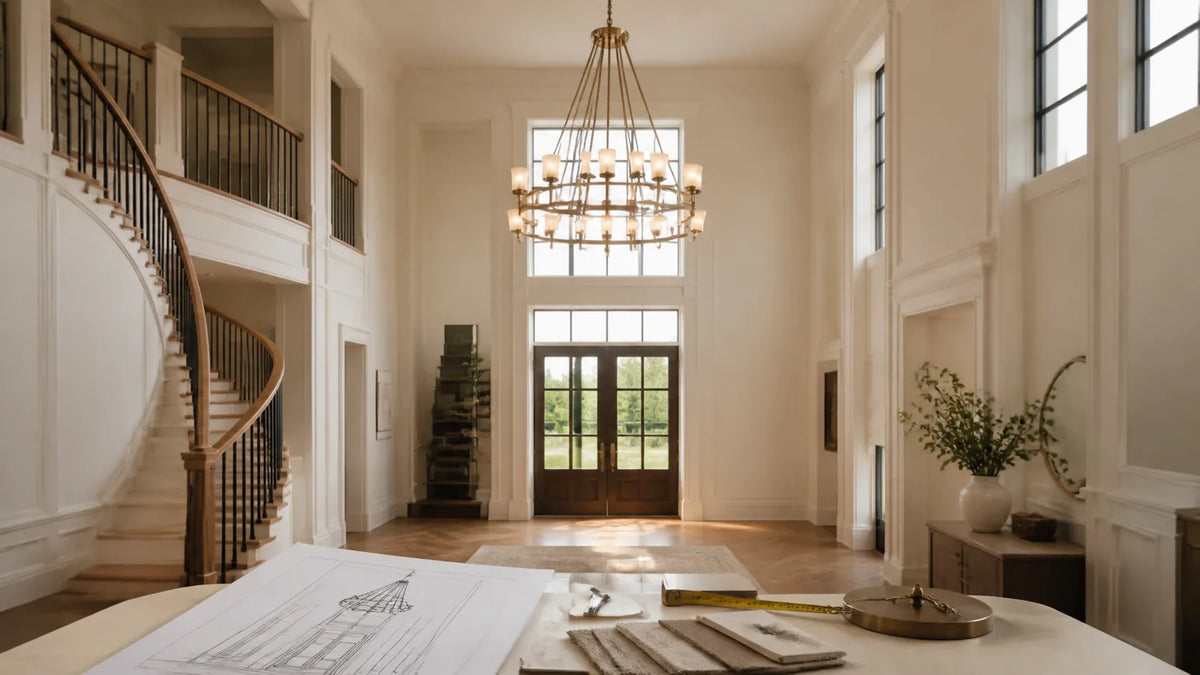
For a two-story entry, the chandelier is not only a light source. It becomes part of the architecture. It is seen from the front door, from the stairs, from the second-floor landing, and sometimes from the street through tall windows. That is why a foyer chandelier should be sized and drawn for the actual room instead of selected only from a product photo.
Quick answer: what size chandelier works in a high foyer?
As a first estimate, a tall foyer usually needs a fixture with more height and presence than a standard dining room chandelier. The chandelier should feel related to the width of the entry, but it also has to occupy enough vertical space so it does not look like a small pendant lost near the ceiling.
Before choosing a size, confirm:
- the finished ceiling height at the hanging point;
- the foyer width and depth, not only the height;
- where the chandelier will be viewed from the front door, staircase, and upper landing;
- the lowest point of the fixture and the clearance below it;
- the ceiling-box position, canopy size, support, and total fixture weight;
- how the chandelier will be cleaned, serviced, and installed.
If the fixture is custom, these details should be checked in a drawing before production. A high-ceiling chandelier can look perfect in a reference photo and still be wrong for the room if the drop, width, or viewing angle is not reviewed.
High-ceiling foyer chandelier planning guide
| Foyer condition | Useful chandelier direction | What to confirm |
|---|---|---|
| Tall but narrow entry | A slimmer vertical chandelier or elongated pendant cluster may work better than a wide frame. | Check side-wall clearance, door swing, and whether the fixture feels crowded from the stairs. |
| Wide two-story foyer | A larger round, tiered, or branching chandelier can help fill the open volume. | Review the diameter against the foyer width and the height against upper windows or balcony rails. |
| Foyer with staircase | A chandelier should look balanced from both the entry floor and the stair view. | Confirm sightlines from the landing and make sure the fixture does not interfere with movement. |
| Very high ceiling or open stairwell | A multi-tier chandelier, long linear form, or custom vertical arrangement may be more proportional. | Check suspension, weight, service access, and packing before approving the design. |
Start with the room, not the chandelier photo
A reference image is useful because it shows the style you like: perhaps an alabaster glow, a brass frame, a cascading glass arrangement, or a modern ring chandelier. But the reference room may have a different ceiling height, different stair opening, different window placement, and different floor area.
For a high-ceiling foyer, the same chandelier can read very differently from room to room. In one entry, a wide tiered chandelier may feel elegant and centered. In another, it may block a tall window or feel too heavy over the front door. A narrow vertical chandelier may look graceful in a stairwell but too small in a large square foyer.
This is why we usually begin with the space:
- How tall is the ceiling at the fixture location?
- How wide and deep is the foyer?
- Is the chandelier centered over open floor, a table, a stair opening, or a window bay?
- Where will people see the fixture first?
- Is the goal soft atmosphere, bright entry lighting, or a strong decorative focal point?
How low should a foyer chandelier hang?
The lowest point matters more than many people expect. In an entry where people walk beneath the chandelier, the fixture must clear normal circulation comfortably. Many projects use at least 7 feet of clearance from the floor as a practical minimum, but the right clearance should be reviewed with the actual room, local requirements, and installation conditions.
In a two-story foyer, the chandelier should usually sit low enough to belong to the open volume instead of hugging the ceiling. If it is too high, it can look small and disconnected. If it is too low, it may crowd the entry, interfere with views, or feel unsafe. The best position often relates to the second-floor landing, tall window mullions, or the midpoint of the open vertical space.
For custom work, the drop should be drawn from ceiling to the lowest decorative point, not only to the main frame. Crystals, glass tubes, stone panels, shades, finials, and lower decorative pieces all count.
How wide should the chandelier be?
Width is usually judged against the foyer width, the ceiling opening, and the visual weight of the design. A delicate open-frame chandelier can be wider without feeling heavy. A dense alabaster or crystal chandelier may need a more restrained width because the material itself has more presence.
For a tall square foyer, a round or tiered chandelier can often feel natural. For a long entry, an elongated form or a pair of coordinated fixtures may work better. For a narrow stairwell, a vertical chandelier may be safer and more elegant than a wide branching frame.
Do not choose width by number alone. Check how the chandelier looks from the entry door, from the stairs, from the upper hallway, and from adjacent rooms. A high-ceiling fixture is experienced in motion; people see it while entering, walking, turning, and looking down from above.
Match the shape to the architecture
The shape of the chandelier should respond to the shape of the space. A tall foyer can handle vertical drama, but the fixture still needs to feel connected to the room.
Round or tiered chandeliers
Round and tiered chandeliers work well in square or nearly square foyers. They create a centered focal point and can look balanced from several directions. The key is checking both diameter and total height so the chandelier does not feel flat or oversized.
Linear chandeliers
Linear chandeliers can work in long entries, gallery-like foyers, or stair openings. They are useful when the room has a clear direction. The installation needs careful alignment because a linear fixture can look wrong if it does not relate to the architecture below.
Cascading or vertical chandeliers
Cascading fixtures are often used in stairwells and very tall foyers because they fill height without requiring a large diameter. They can be made with glass, crystal, metal elements, or stone pieces, but the hanging sequence and service access should be reviewed early.
Material changes the scale
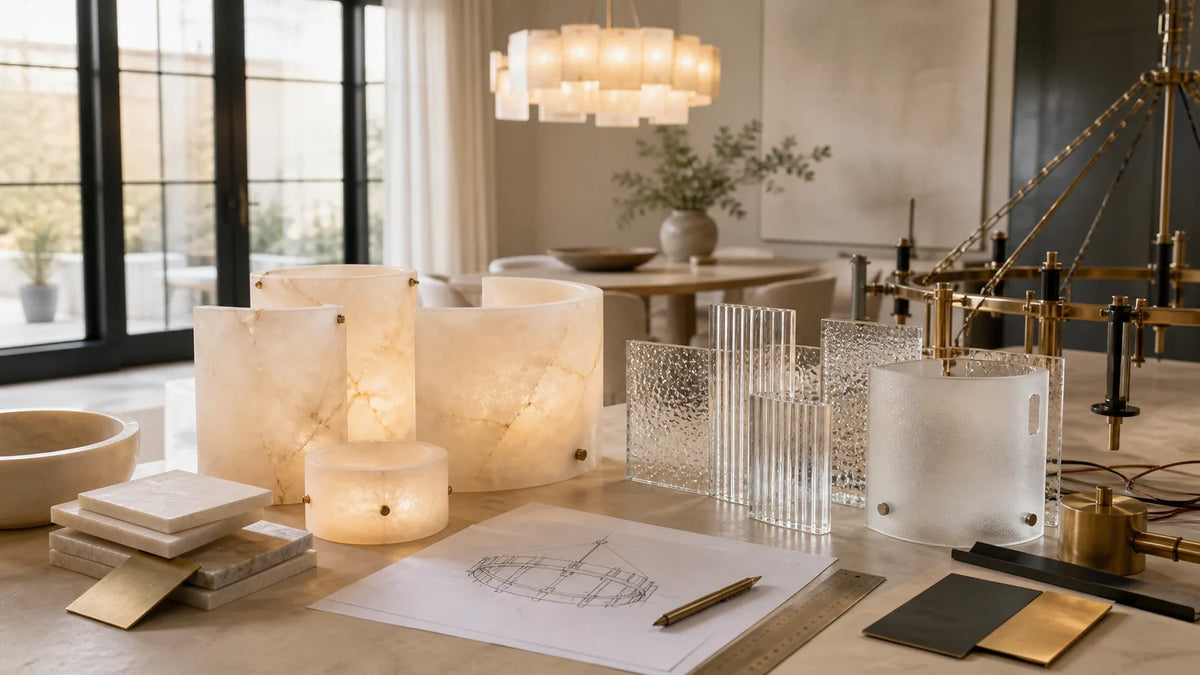
Material affects how large the chandelier feels. A glass chandelier may look lighter because you can see through parts of it. A brass and alabaster chandelier may feel warmer and more substantial. A crystal chandelier may look larger because it catches light and reflections from many angles.
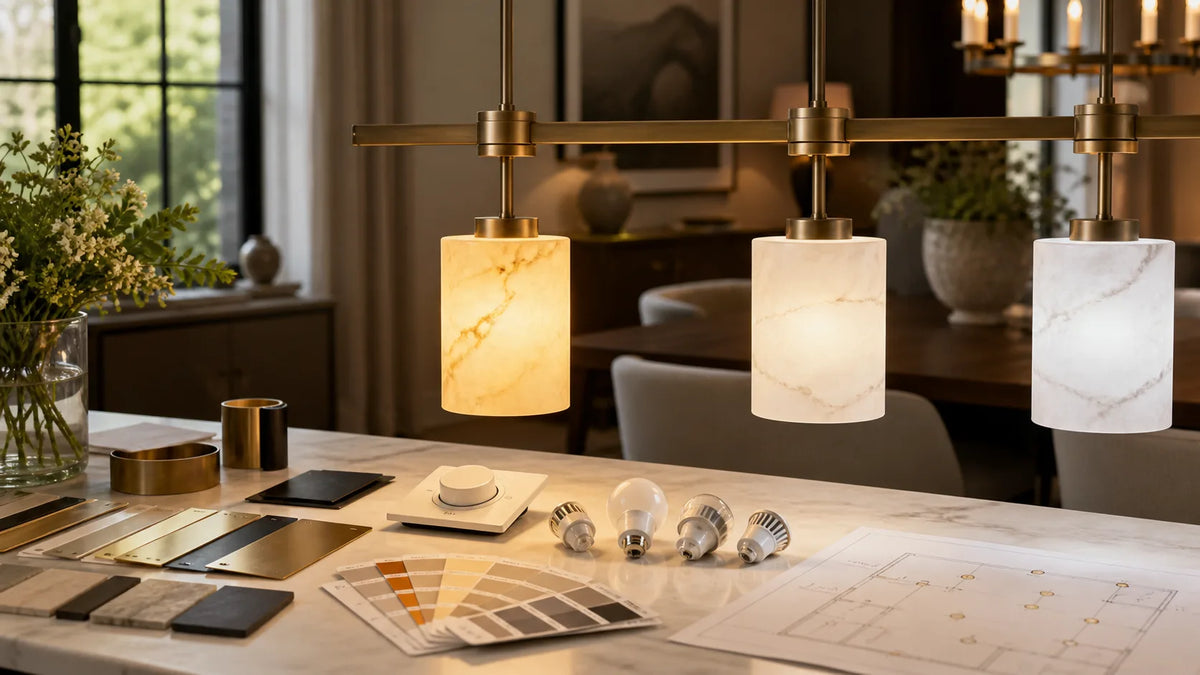
This matters in a high foyer because the fixture is visible from far away and up close. A material that looks quiet in a small sample can become dominant when repeated across a large chandelier. A material that looks bright in a showroom may create glare when viewed from the landing. The material choice should be reviewed together with scale, not after the size is already fixed.
If you are still comparing materials, our guide to alabaster vs. glass chandeliers may help clarify the light effect and visual weight.
Do not ignore weight, support, and service access
A high-ceiling chandelier is harder to install and harder to service than a standard room fixture. Before production, the project team should confirm whether the ceiling can support the fixture, whether additional blocking or structural review is needed, and how the chandelier will be lifted, assembled, and wired.
The larger the chandelier, the more important the canopy and suspension become. A decorative canopy is not only a visual part; it helps organize the connection between the fixture and the ceiling. For heavy fixtures, multi-point suspension or project-specific hardware may be required.
Service access also matters. Bulbs, LED components, glass pieces, crystal strands, and stone shades may need cleaning or replacement over time. If the chandelier hangs over stairs or a very tall entry, think about maintenance before approving a design that looks beautiful but is nearly impossible to reach.
What to send for a custom foyer chandelier quote
To receive a useful recommendation, send information that explains both the room and the design direction:
- ceiling height at the hanging point;
- foyer width and depth;
- photos from the front door, stair, and upper landing;
- any floor plan, elevation, or builder drawing available;
- the current ceiling-box location;
- preferred fixture style, material, and finish;
- any reference images showing the look you want.
With these details, a custom lighting studio can review the fixture size, drop, suspension, material, and production drawing together. That makes the process more reliable than choosing a chandelier by height alone.
FAQ
What size chandelier is best for a two-story foyer?
The best size depends on ceiling height, foyer width and depth, viewing angles, and the fixture material. A two-story foyer usually needs more vertical presence than a standard room, but the chandelier should still leave safe clearance and feel balanced with the architecture.
How low should a chandelier hang in a foyer?
The lowest point should clear circulation comfortably. Many projects use at least 7 feet above the floor as a practical minimum where people walk below, but high foyers also need the fixture low enough to belong to the vertical space. The final drop should be checked in the actual room.
Should a foyer chandelier be centered in the room?
Usually it should relate to the architectural center or the main visual axis, but that may not be the same as the mathematical center of the room. Staircases, windows, doors, ceiling boxes, and upper landings can all affect the best position.
Is a round or linear chandelier better for a foyer?
A round or tiered chandelier often works well in a square foyer. A linear chandelier can work better in a long entry or stair opening. A vertical cascading chandelier can be useful when the space is tall but not very wide.
Can a foyer chandelier be customized?
Yes. Width, height, drop, material, finish, suspension, light source, and canopy details can often be customized. For a high-ceiling foyer, customization should include drawing review, weight review, support planning, packing, and installation guidance.
A successful foyer chandelier is not simply the largest fixture that fits. It is the fixture that feels proportionate from every important view, clears the space safely, gives the right kind of light, and can actually be installed and maintained. If you are planning a high-ceiling entry or stairwell fixture, our custom lighting process can help review the room details before production begins.