What Installation Information Is Provided Before Shipment?
A custom chandelier is not truly finished when it leaves the workshop. It still has to arrive safely, make sense when the crate is opened, and be installed in the room it was designed for.
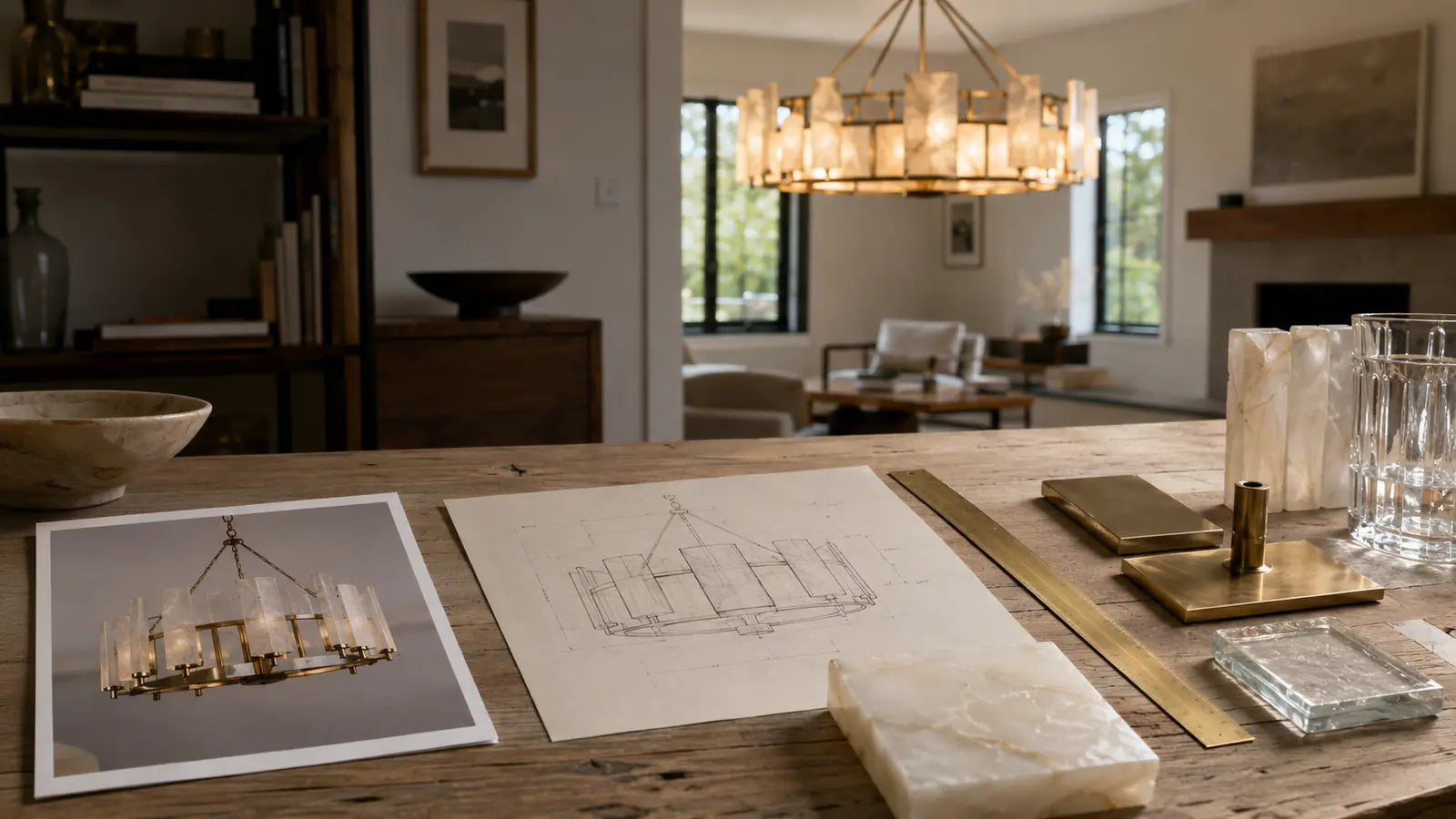
Before shipment, we provide installation information suited to the fixture and its configuration. A simple pendant does not need the same package as a large multi-part chandelier, so the exact material varies. The goal is practical: help the qualified installer understand the components, assembly sequence, suspension, and electrical arrangement before work begins.
What the guidance may include
Depending on the fixture, pre-shipment information may cover:
- a parts overview or labeled component reference;
- canopy, rod, chain, cable, or suspension arrangement;
- the recommended assembly sequence;
- wiring or driver-placement information where applicable;
- how decorative parts such as glass, crystal, or stone are attached;
- fixture weight and mounting notes available for the order;
- unpacking and handling precautions;
- the location of spare or separately packed components.
For some fixtures, photographs or a short installation video are more useful than a dense page of text. We decide this according to the way the light is packed and assembled.
What the project team should confirm before shipment
The fixture maker cannot see every condition behind the finished ceiling. The installer, electrician, contractor, and—when required—structural professional should verify the actual site. Important questions include:
- Is the ceiling structure suitable for the fixture’s weight and suspension points?
- Is the junction box or mounting support in the correct location?
- Does the canopy fit the ceiling condition?
- Are the supply voltage, switching, dimming, and driver locations confirmed?
- Is the finished hanging height correct for the room and furniture?
- Can the crate and largest fixture section reach the installation area?
- Will a lift, scaffold, hoist, or temporary platform be needed?
- Is there a clean, protected area for unpacking and assembly?
If any of these points are unusual, tell us during design review rather than after the fixture arrives.
Large fixtures need an access plan
A drawing can show that a chandelier fits the room and still miss the route into the room. Doorways, elevators, stair turns, finished millwork, and construction sequencing all matter.
When access is limited, a fixture may need to ship in sections. That decision affects the frame connections, wiring, labeling, packing, and installation sequence, so it should not be left until crating day. A photograph of the access route and the narrowest dimensions can be surprisingly helpful.
Unpack in order, not all at once
Large decorative lights often contain repeated parts that look similar but belong in specific positions. Keep labels in place until the installer understands the layout. Do not place stone, glass, or finished metal directly on a hard floor. Retain packing materials until the fixture has been checked and all components are accounted for.
It is usually better to install the main frame first and add fragile decorative elements afterward. The project-specific instructions should confirm the intended sequence.
Installation guidance is not a substitute for a qualified installer
Our information explains the fixture supplied. It does not replace site engineering, local code review, or the judgment of a licensed electrician and experienced installer. Ceiling construction, branch wiring, support hardware, local requirements, and jobsite safety remain site responsibilities.
For general background on lighting safety standards and certification, UL Solutions provides an overview of its lighting work. For any specific order, certification or listing claims must match the exact product and configuration; they should never be assumed from a similar fixture.
Information to share early
The most useful installation conversations happen before production. Send any available reflected ceiling plan, elevation, ceiling section, mounting detail, junction-box information, or contractor note. For sloped ceilings, include the angle and intended hanging orientation. For a very long drop, confirm whether the installer has the equipment to reach both the canopy and the lowest assembly point.
If the driver or transformer must be remotely located, identify an accessible, ventilated service location and have the electrical team confirm the arrangement. If a control system is involved, provide its details before components are finalized.
What to check when the shipment arrives
- Inspect the outside of the crate or cartons before moving them into storage.
- Photograph any visible impact or damage before opening.
- Compare the received packages with the packing information.
- Open the shipment in a clean, protected space and keep labels with the parts.
- Confirm that the installer has the latest drawing and installation material.
- Contact us before forcing, drilling, cutting, or altering a component that does not appear to fit as shown.
These steps sound ordinary, but they prevent a great deal of confusion on busy construction sites.
One useful habit: have the installer review the fixture information before scheduling the lift or closing the ceiling. Questions are much easier to solve while the mounting area is still accessible.
If your project has a sloped ceiling, difficult access, unusual support condition, or multi-part installation, mention it in your custom-lighting inquiry. We can consider the installation sequence while the fixture is being developed, not after it is packed.