Factory-Direct Custom Chandeliers: How to Choose Color Temperature
For most factory-direct custom chandeliers, 2700K or 3000K is the safest color temperature choice. Use 2700K when the room should feel warm, intimate, and residential. Use 3000K when you want a cleaner warm white that still feels comfortable. Use 4000K only when the space needs a noticeably brighter, more neutral appearance, such as some commercial, retail, or task-oriented areas.
Color temperature is not a small detail in custom lighting. It changes how brass, black metal, glass, alabaster, crystal, stone, wood, fabric, and wall colors appear in the finished room. When you order a custom chandelier directly from a lighting factory, the color temperature, dimming method, voltage, light source, and material choice should be confirmed before production begins.
Quick answer for custom chandelier buyers
If you need a practical starting point, use this guide:
- 2700K: best for warm residential dining rooms, bedrooms, lounges, restaurants, boutique hotels, and atmospheric interiors.
- 3000K: best for most custom chandeliers when you want warm white light with a cleaner, more modern feeling.
- 3500K: useful in some transitional spaces where warm white feels too yellow but 4000K feels too cool.
- 4000K: best for brighter commercial spaces, offices, galleries, and some hospitality projects where neutral clarity is more important than warmth.
- Dimming: strongly recommended for dining rooms, foyers, restaurants, villas, hotels, and other rooms where the lighting mood changes through the day.
For a made-to-order chandelier, the best choice depends on the room, material, fixture size, light source, and local electrical requirements. A factory-direct custom lighting supplier should ask these questions before confirming production, not after the chandelier is already assembled.
Chandelier color temperature comparison
| Color temperature | Best use | What it feels like | Custom lighting note |
|---|---|---|---|
| 2700K | Dining rooms, bedrooms, warm foyers, lounges, restaurants, boutique hotels | Warm, soft, relaxed, evening-friendly | Pairs well with brass, bronze, alabaster, warm glass, wood, and natural stone. |
| 3000K | Most residential chandeliers, villas, kitchens, stairwells, modern dining rooms | Warm white, clean, balanced, less yellow than 2700K | A common safe choice for factory-direct custom chandeliers when the room needs both comfort and clarity. |
| 3500K | Mixed-use interiors, showrooms, transitional commercial spaces | Neutral warm, clearer than 3000K, softer than 4000K | Useful when a project team wants a bridge between residential warmth and commercial brightness. |
| 4000K | Offices, retail, galleries, some hospitality corridors and functional areas | Neutral, bright, more task-oriented | Should be reviewed carefully for decorative chandeliers because it can make warm finishes feel cooler. |
Why color temperature matters more in custom lighting
Standard chandeliers are often selected from a fixed specification. With custom lighting, the fixture can be adjusted in size, finish, material, suspension, light source, and sometimes the lamp holder or LED system. That flexibility is useful, but it also means decisions are connected.
A large alabaster chandelier at 2700K may feel warm, calm, and luxurious. The same chandelier at 4000K may look cleaner but less intimate. A clear glass chandelier with visible bulbs at 2700K may feel decorative and soft. At 4000K, it may create sharper glare and a more commercial feeling. A brass frame can look richer under warm light, while blackened metal may look crisper under 3000K or 3500K.
That is why factory-direct customization should not stop at dimensions. The lighting factory should understand how the chandelier will actually be used: dinner, hotel reception, stairwell feature, retail display, villa foyer, kitchen island, restaurant table, or private bedroom.
2700K: warm and atmospheric
2700K is close to the warm feeling many people expect from traditional residential lighting. It is often a good choice when the chandelier is decorative, the room is used in the evening, and the goal is comfort rather than task brightness.
For custom chandeliers, 2700K works especially well with:
- brass, antique brass, bronze, and warmer metal finishes;
- alabaster shades or natural stone diffusers;
- restaurants, private dining rooms, bedrooms, lounges, and hospitality suites;
- interiors with wood, cream, beige, warm white, natural stone, and soft textiles.
The main caution is that 2700K can look too yellow in very clean white interiors or commercial spaces that need brighter visual clarity. If the room has white marble, cool gray walls, or modern black-and-white finishes, 3000K may be a safer balance.
3000K: the most versatile warm white
3000K is often the best color temperature for a custom chandelier when the buyer wants warmth but does not want the room to feel too yellow. It is common in modern homes, villas, dining rooms, stairwells, foyers, and many hospitality spaces.
For factory-direct custom lighting orders, 3000K is a practical default because it works with many materials. It keeps alabaster soft, makes glass feel clean, preserves the warmth of brass, and still gives better clarity than 2700K. If a project includes multiple chandeliers, wall lights, and ceiling lights, 3000K can also help keep the overall lighting plan consistent.
This does not mean every fixture should be 3000K. If the chandelier is for a romantic restaurant, 2700K may be better. If the chandelier is for a bright showroom or retail space, 3500K or 4000K may be reviewed. But for many custom chandelier inquiries, 3000K is the most flexible starting point.
4000K: bright, neutral, and more commercial
4000K can be useful, but it should be chosen intentionally. It creates a more neutral white appearance and can make a room feel brighter. That may be helpful in offices, commercial lobbies, showrooms, galleries, salons, and functional hospitality spaces.
For decorative chandeliers, 4000K has a different risk. It can make warm brass appear less rich, make alabaster feel cooler, and make a dining room less comfortable in the evening. It can also make clear glass and exposed bulbs feel sharper. If the chandelier is meant to create atmosphere, 4000K may not be the best first choice.
When a buyer requests 4000K for a custom chandelier, it is worth checking the whole project: wall color, ceiling height, natural daylight, other fixtures in the room, and whether the chandelier is decorative or functional. In some cases, using 3000K for the chandelier and brighter supporting lights elsewhere gives a better result.
How material affects color temperature
The same color temperature can look different through different materials. This is one reason factory-direct custom chandelier orders should confirm both the material and the light source before production.
Alabaster
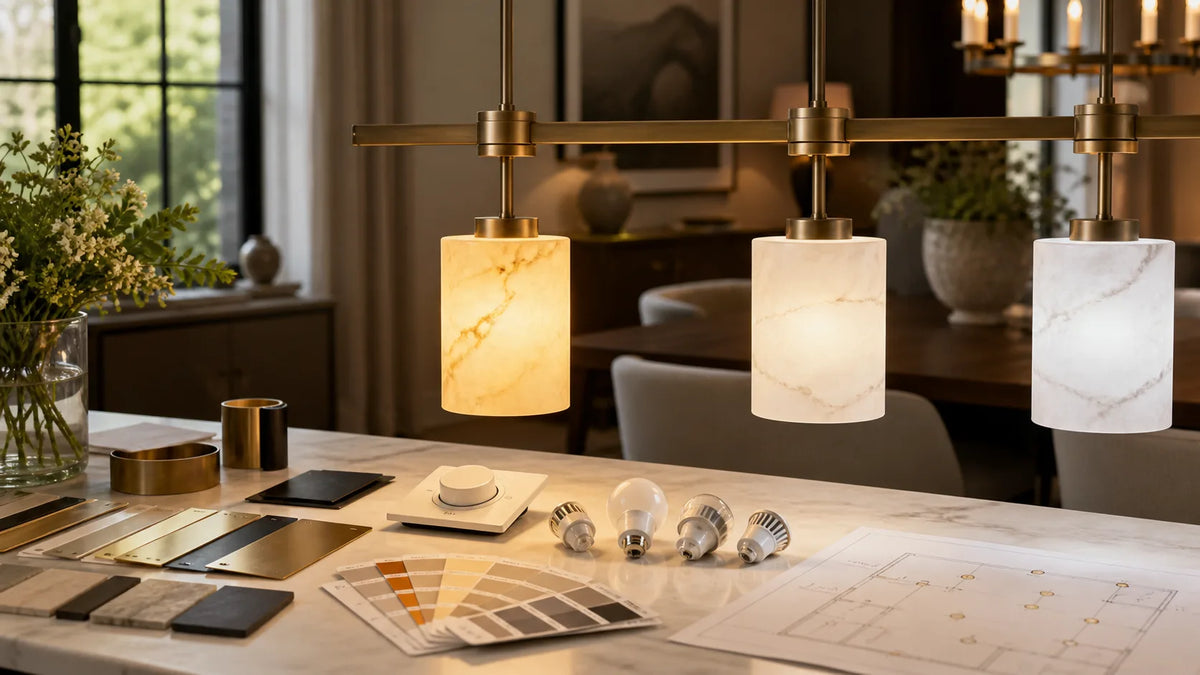
Alabaster naturally diffuses light and can add warmth because of its stone tone and veining. A 3000K LED behind alabaster may feel softer than the same LED behind clear glass. If the customer wants a golden evening glow, 2700K is often attractive. If the customer wants the stone to look clean but still warm, 3000K is usually safer.
Glass
Clear glass reveals the bulb and can show glare more easily. Frosted, opal, ribbed, or fluted glass diffuses the light differently. With clear glass, bulb shape and color temperature are both visible. With frosted glass, the shade itself helps soften the result.
Crystal
Crystal reflects and refracts light, so color temperature affects sparkle. Warmer light can feel more traditional and intimate. Cooler light can feel brighter and sharper. For hotels, foyers, and stairwells, the right choice depends on the surrounding architecture and the desired mood.
If you are still deciding between materials, our guide to alabaster vs. glass chandeliers explains how material changes light effect, weight, care, and visual presence.
Do not forget CRI and dimming
Color temperature is only one part of light quality. CRI, dimming, driver quality, bulb type, and voltage also matter. A chandelier can have the right Kelvin number and still look disappointing if the color rendering is poor or the dimming is unstable.
For many custom chandelier projects, ask about:
- color temperature, such as 2700K, 3000K, 3500K, or 4000K;
- CRI or color rendering requirement;
- whether the fixture uses replaceable bulbs or integrated LED;
- dimming compatibility, such as phase dimming, 0-10V, DALI, or project-specific systems;
- local voltage and electrical standards;
- driver location, access, and replacement planning.
For U.S. residential projects, many buyers ask about 110-120V compatibility and dimming. For commercial or hotel projects, the electrical team may need more detailed driver and control information. A custom lighting manufacturer should confirm these requirements before finalizing the production drawing.
Factory direct customization: what can be confirmed before production?
One advantage of ordering factory direct custom lighting is that important details can be reviewed before the fixture is made. The buyer is not limited to a single stock specification if the project needs a different size, drop, finish, material, or light effect.
For a custom chandelier, the factory can often review:
- fixture width, length, height, and overall drop;
- finish direction, such as brass, bronze, black, nickel, or custom metal finish;
- materials such as alabaster, glass, crystal, metal, fabric, or mixed materials;
- color temperature and light source direction;
- canopy size, rod, chain, cable, or suspension method;
- packing, installation sequence, and project-specific drawing details.
This is where a factory-direct custom chandelier is different from a simple online product purchase. The goal is not only to buy a light. The goal is to make sure the chandelier fits the room, works with the electrical plan, supports the desired mood, and can be installed correctly.
What to send for a custom lighting quote
To receive a useful recommendation, send information that connects the light to the room:
- room type, such as dining room, foyer, stairwell, kitchen island, hotel lobby, restaurant, or bedroom;
- ceiling height and room dimensions;
- fixture size target or reference image;
- preferred material and finish;
- desired color temperature if already known;
- local voltage and dimming requirements;
- photos, drawings, or inspiration images.
If you are planning a made-to-order chandelier, our custom lighting process can review color temperature together with dimensions, drawings, materials, finish, electrical details, and installation guidance.
FAQ
What color temperature is best for a chandelier?
2700K is best for warm atmosphere, while 3000K is the most versatile warm white for many custom chandeliers. 4000K is brighter and more neutral, but it is usually better for commercial or task-oriented spaces than intimate residential rooms.
Is 2700K or 3000K better for a dining room chandelier?
2700K feels warmer and more intimate. 3000K feels cleaner while still remaining warm. For many modern dining rooms, 3000K is a practical choice; for restaurants or softer evening rooms, 2700K may be better.
Can a factory direct chandelier be customized with a specific color temperature?
Yes, many factory-direct custom chandeliers can be specified with a preferred color temperature, depending on the light source, driver, bulb type, and electrical requirements. It should be confirmed before production.
Does alabaster change the color of chandelier light?
Alabaster diffuses light and can make it feel warmer because of the natural stone tone and veining. A 3000K light source behind alabaster may appear softer than the same light source behind clear glass.
Should a custom chandelier be dimmable?
For dining rooms, foyers, bedrooms, restaurants, villas, and hotels, dimming is often a good idea. The dimming method must match the driver, bulb, voltage, and control system, so it should be discussed before production.
The right color temperature makes a custom chandelier feel intentional rather than accidental. When you order factory direct custom lighting, confirm the room use, material, finish, light source, dimming, and electrical details together. That gives the factory enough information to build a chandelier that looks right in the finished space, not only in a catalog photo.